
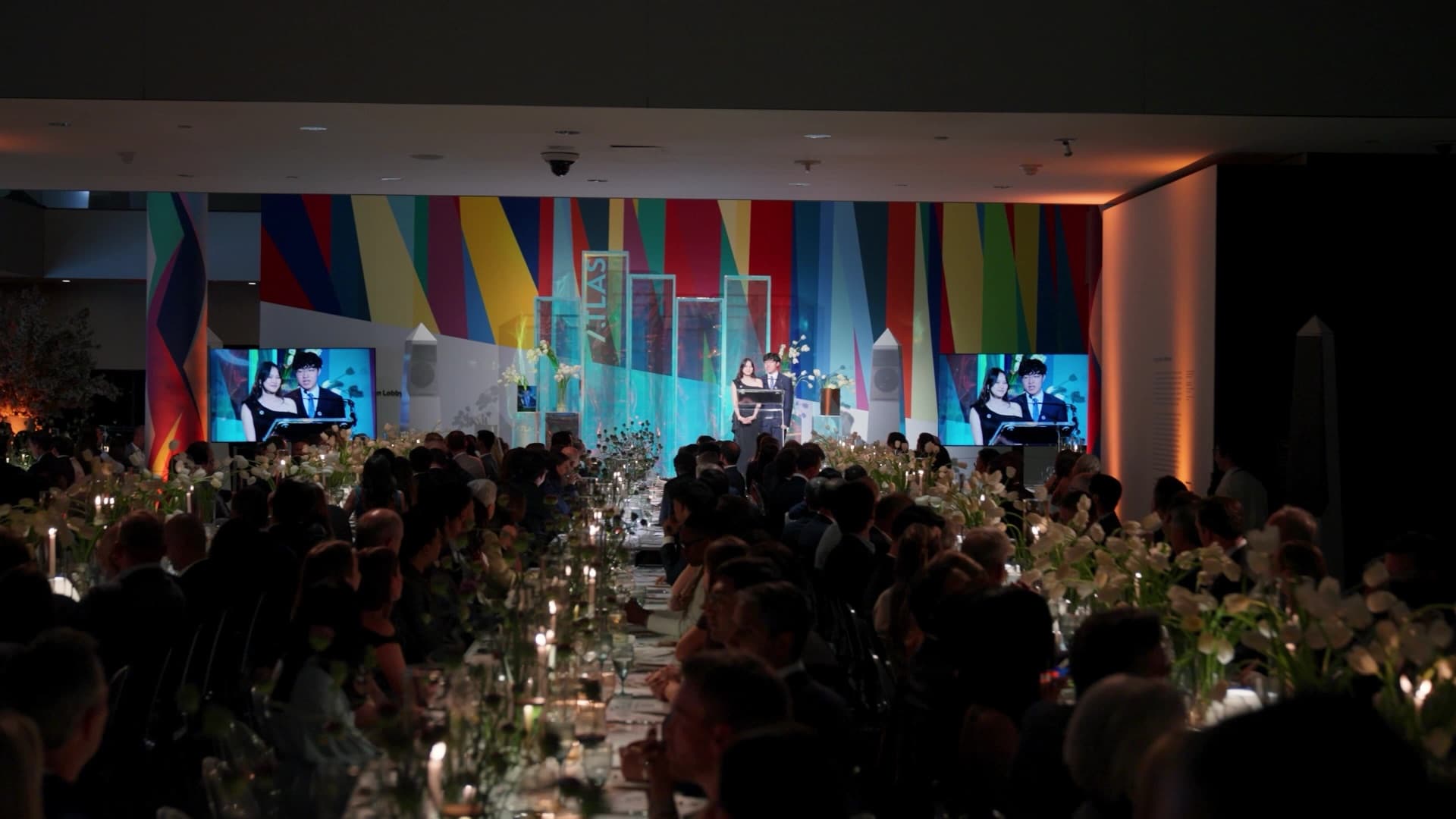
How to Plan Your Nonprofit's Anniversary Gala Video (And Make It More Than a Moment)
Your nonprofit's anniversary is one of the most powerful fundraising moments you will ever have, and most organizations underuse it. Here is the three-phase video strategy that turns the night into a campaign.
Your nonprofit's anniversary is one of the most powerful fundraising moments you will ever have. Most organizations underuse it.
A milestone anniversary – 25 years, 35 years, 50 years – is not just a reason to celebrate. It is an amazing storytelling opportunity with a built-in hook, a captive audience of your donors and real urgency. For the organizations that get it right, a well-produced anniversary gala video does not just move people in the room. It becomes the centerpiece of a campaign that builds before the event, lands on the night, and carries momentum forward long after it is over.
Here is what we believe is the best way to plan for your anniversary video.
Why Anniversary Galas Are Different
The average gala video is often an afterthought, produced in the weeks before the event, shown once on a screen, and rarely seen again.
Anniversary galas are different. Your donors, board members, and community already have a relationship with your organization's history. They have seen you grow. They may have been there from the beginning. The emotional and financial stakes are higher.
That means the video has to do more. It has to honor what your organization has built and make the case that the most important chapter is still ahead. It has to feel worthy of the moment.
Research consistently shows that more than half of people who watch a nonprofit video go on to make a donation. At an anniversary gala, that audience is already in the room and invested. The video is what tips them from engaged to donating.
The organizations that maximize that opportunity treat their anniversary video as a campaign asset, not a single-use production.
The Framework: Before, During, and After
The most effective anniversary video strategies are not built around a single film. They are built around three phases, each with its own purpose.
Phase 1: Build Momentum Before the Event
Your anniversary is a story that unfolds over time. If you wait until the night of the gala to start telling it, you have already left value on the table.
In the weeks and months leading up to the event, shorter-form video content can build anticipation, engage your base, and prime donors for a major ask:
Save-the-date or event teaser videos. A short piece that captures the energy of what is coming. Sixty to ninety seconds is enough to build urgency around attendance and set the tone for the campaign.
Archival throwbacks and milestone content. Short clips for social media that walk through the organization's history. "35 moments from 35 years." Before-and-after community impact. Founding stories from leadership. These give your audience something to engage with and share in the run-up to the event.
Interview and testimonial teasers. Sneak peek content featuring voices who will appear in the main film. This creates continuity between your pre-event campaign and the gala itself, so the centerpiece film feels like the payoff of a story your donors have already been following.
The goal of Phase 1 is to arrive at the gala with donors who are already emotionally warmed up. They have been following the story, sharing the content, and feeling the weight of what this anniversary means.
Phase 2: The Centerpiece Film
This is the main event. The film that plays in the room, in front of your donors, at the most emotionally charged moment of the night.
For an anniversary gala, this film has one job: move people enough to give.
A few things we have seen work consistently:
Honor the past, but face forward. The instinct is to make a retrospective of everything you have accomplished. That is fine, but it is not enough on its own. The most effective anniversary films spend roughly 25 percent of their time honoring the history and 75 percent casting a bold vision for what is ahead. The message is not "look how far we have come." It is "look how far we still need to go, and what is possible if you are with us."
Put real people at the center. Beneficiaries, volunteers, founding members, staff who have given their careers to the mission. These are the voices that land. Not the statistics, not the executive summary. The specific, human story of someone whose life intersected with your organization and was changed by it.
Do not shy away from the weight of the work. If your mission addresses serious issues, the film should acknowledge that weight. Not in a way that crushes the room, but in a way that reminds people why they are there and why it still matters.
Resist the temptation to make the video too long. Aim for under five minutes. In a live event context, attention is precious. A tightly edited four-minute film will land harder than a sprawling eight-minute one.
Phase 3: Carry the Momentum Forward
This is the phase most organizations skip entirely, and it is where real long-term value lives.
Your gala video does not stop working when the lights come up. If you have built something meaningful, it deserves a longer life:
Release the centerpiece film publicly. Put it on your website, your social channels, and your email campaigns. The donors who could not attend, the foundations watching from a distance, the board members who want to share it with prospects: this film becomes one of your best outreach tools for the next 12 months.
Produce a gala recap video. A shorter highlight piece that captures the energy of the night. This is powerful for donor stewardship and for building excitement around next year's event.
Create social cutdowns. Take the most powerful 30 to 60 second moments from the main video and repurpose them for Instagram, LinkedIn, and email.
Follow up with donors. A short, personal video message from your Executive Director or a key program voice, sent in the weeks after the gala, keeps the campaign alive and acknowledges the donor's role in what comes next.
What Makes a Milestone Anniversary Different
A genuinely significant anniversary milestone changes everything.
At 10 or 15 years, an anniversary is a marker. At 25, 35, or 50 years, it is a statement. It says: this organization is not going away. This work is not a phase. These people have given decades of their lives to this mission, and they are not done.
That calls for a completely different emotional register, and your video strategy should match it.
For significant milestones, consider anchoring your entire campaign around a forward-facing theme. Not "celebrating 25 years," but "the next 25 starts now." The history is the proof of concept. The ask is for what happens next.
This framing can unlock major donor engagement at a level that typical gala videos do not reach. When donors feel like they are being invited into the next chapter rather than asked to applaud the last one, the giving follows.
When Should You Start Planning?
Anniversary gala video is not something to start two months out. Here is a general planning timeline:
9 to 12 months out: Align on narrative strategy, milestone theme, and what success looks like for the campaign as a whole.
6 months out: Begin pre-event video content production. Lock in interview subjects for the main film.
3 months out: Main film production, including shoots, interviews, and b-roll.
4 to 6 weeks out: Edits, reviews, final delivery of main film. Pre-event content is publishing.
Week after: Gala recap video, public release of main film, social cutdowns in production.
For budget context on what investments at this scale typically run, see our breakdown of typical nonprofit video costs.
What to Look for in an Anniversary Video Partner
Not every video production company is equipped for this kind of work. For an anniversary gala film, you want a partner who:
Understands how to interview people in emotionally sensitive contexts without making them feel like they are on camera.
Can help you think through the campaign strategy, not just the production.
Has a track record with nonprofit work specifically, because the sensibility required is different from commercial or corporate video.
The technical execution matters. But the storytelling instincts matter more.
Your nonprofit's anniversary is one of the biggest fundraising windows you will ever have. Treat the video and the content strategy around it as the campaign centerpiece it deserves to be.
Planning an anniversary gala? Let's talk about what a video campaign could look like for your organization.
Book a CallWRITTEN BY 1708 MEDIA
1708 Media is an Emmy-winning video production company built for nonprofits. We produce mission films, fundraising videos, social content, and yearlong video partnerships for organizations across the country.
STRATEGY
Most First-Time Donors Never Give Twice
Fewer than 1 in 5 first-time donors give a second gift. Here's what new donors need to see in their first 90 days, and how stories bring them back.
STRATEGY
How Should Nonprofits View AI's Impact on Storytelling?
AI can streamline nonprofit storytelling, but it can't replace the human behind the story. Here's where 1708 Media draws the line.
STRATEGY
What One Production Day Should Produce: Notes From a Week of Shoots
Four shoots, three cities, one week. The most useful lesson was not about cameras. It was about what gets decided before the shoot, and how that determines a year of donor engagement.