Not Every Video Needs to Look Like a Movie (And Not Every Photo Needs to Look Like a Video)
Vertical, cinematic, snackable, still images. The format debate is a distraction. The real question is what your donor needs to feel, when they need to feel it, and where they will encounter your story.
Every once in a while, a debate flares up in the video world about vertical video versus horizontal video. Whether it should ever be shot in cinema mode. Whether short-form kills craft. What quality really means.
These conversations are, first and foremost, exhausting. Second, they miss the point. The best video and content, no matter what the format, is subject to the goal. It's easy to say vertical is worse, or short-form is worse, but they are, when done thoughtfully, tools that serve real strategic needs.
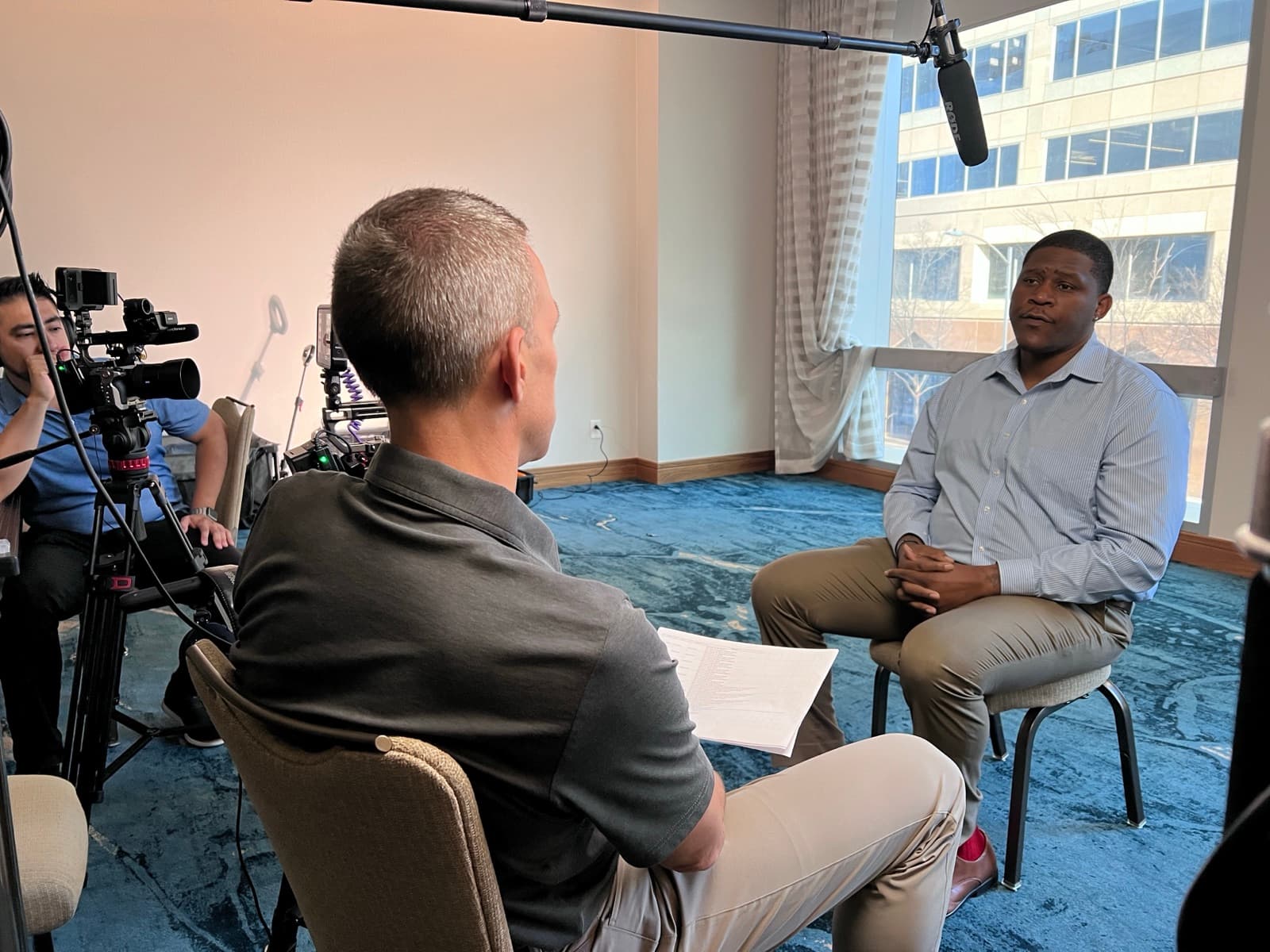
Our system is built around getting the most out of a single production day. That means we plan for every format and asset before we even show up. When we shoot our main film, we shoot with the added benefit of putting in some content and shots for a vertical video that will live on social. Some content that will be edited into a series of vertical shorts that come out mid-year and remind donors of the impact they had. And some content that will be edited into 60-second cutdowns that live in donor emails. We do not treat any of these as afterthoughts. We treat them as different tools that hit at different points in the calendar and serve different types of donors and prospects.
Why the “vertical vs cinema” debate misses the point
A donor scrolling on their phone during their morning coffee is not in the same mindset as a donor watching your main film on a big screen at the gala. One is looking for a quick emotional hit. The other is settling in for a story. Vertical video is not lesser video. It just does a different job.
A well-produced cinema-mode piece is beautiful. It commands attention. It can move a room. But a vertical piece is what gets your donor to actually stop mid-scroll. And if your goal is to remind that donor mid-year that their gift is doing something meaningful, a vertical short that plays on their phone is often the format that fits the moment.
What format actually does for you
Think of it this way. A cinematic piece is the movie you take your donor to. A vertical piece is the phone call from a friend. A short cutdown that lives in an email is a postcard. A photograph that shows a real moment inside your program is a snapshot on the fridge.
Each one has a distinct purpose. Each one belongs somewhere different in a donor's year. And the biggest mistake nonprofits make with video is trying to build one asset that plays every role. It is not just inefficient, it also does not work. The donor experience gets flattened, everything starts to sound the same, and eventually your content begins to blur into itself.
If the same story spends a week in cinema mode at the gala, then shows up as a snapshot in a mid-year email, then reappears as a snackable vertical on social a few weeks later, the message compounds. If it lives only in one format, it works once and then rests. Almost none of your donors will see the video more than once. The average lifespan of a video content piece these days is measured in days at best. Making it stretch across an entire year with multiple purposes is the only way to make sure your work continues to serve you.
Video is not the only format that matters
Photography is another undervalued piece of this puzzle. It's often something we come across on a project, and organizations that we work with don't have any better than iPhone photography of the work they are doing. Which, while there is some usefulness to iPhone shots, they aren't going to serve you well the majority of the time.
A photograph pulls double duty. It anchors an email in a way stock imagery cannot. It puts a real face on your annual report. It makes a website feel like a place your donors can trust. When our creative team is on-site for video, our photographer is also documenting the moment, which means we can build a library of images that support the narrative for the entire year. The same production day gives us the film, the shorts, the social pieces, and the photography.
A great photo has a life all its own. It gets used for stewardship. It shows up on a donor's welcome kit. It ends up in a foundation pitch. It becomes a piece of visual identity for the campaign. Nonprofits often invest heavily in video and completely underinvest in photography. That's a mistake. Your website, your email, and your printed materials are running on visual identity. Great imagery is a huge component of that.
The moments where format really matters
When you think about the moments in your donor calendar that need real focus, imagery choices become obvious.
A stewardship email in March is not a cinematic film. It is a photograph and a few sentences. A pre-event teaser is not a cinema-mode montage. It is a vertical clip that feels like an invitation. A gala video is a cinema-mode film. It is meant to slow the room down. A giving Tuesday video should be a punchy vertical short. It is meant to move fast. A campaign wrap-up is a mix of formats. It reflects the whole arc.
When you match the format to the moment, the moment lands. When you pull the wrong format into the wrong moment, everything feels slightly off, even if the piece itself is high quality.
Why nonprofits get this wrong
A few patterns show up over and over:
- Prioritizing cinematic craft when the donor is not in a cinematic moment. A gorgeous three-minute film in a phone-scroll context loses to a fifteen-second vertical that feels alive. Your donor is not stopping to admire the craft. They are trying to feel something quickly.
- One video for everything. A single cinematic film gets asked to serve as the gala video, the social post, the appeal video, and the volunteer recruitment tool. It cannot do all of it well.
- Underinvesting in photography. Teams pour their entire budget into one video, then use iPhone photos for the rest of the year. It undermines the polish of everything else.
- Failing to plan the mix. Nonprofits treat format as a decision made after the shoot. It should be the decision made before it.
What planning the mix looks like
Before a shoot, our team is asking questions that most video companies do not.
Where is this story going to live over the next twelve months? Which moments in the calendar need to hit the donor in the palm of their hand? Which moments need cinema-mode weight? Where will photography carry the message better than motion? What does this story need to look like six months from now, when the campaign moment has passed but the donor journey continues?
Answering those questions before the shoot allows our creative team shifts the format based on where it will live. It's why our system is built around a single production day that creates a year of content across many formats.
What we want you to take away from this
The debate about which format is better is a distraction. The right question is what your donor needs to feel, when they need to feel it, and where they will encounter your story.
The best nonprofit content of the next few years will not come from picking a side in the vertical versus cinema fight. It will come from teams that understand the whole toolbox and use it thoughtfully. Cinematic film for the moment that needs weight. Vertical clips for the moment that needs speed. Photography for the moment that needs quiet. Snackable pieces for the phone scroll.
Your donors move through every one of these contexts. Your content should too.
That is what our Donor Story System is designed to solve. One production day. A full year of content across every format your donors will actually see. And a plan built around the moments that matter most.
Your donor is not thinking about production values. They are thinking about your mission, their time, and whether what they are looking at feels worth their attention.
That is the moment where the format matters.
Not sure which format your next fundraising moment actually needs?
That is the kind of conversation we love. Let's talk about what your donors are actually seeing, when they're seeing it, and how to make each moment land.
Book a Story SessionWRITTEN BY 1708 MEDIA
1708 Media is an Emmy-winning video production company built for nonprofits. We produce mission films, fundraising videos, social content, and yearlong video partnerships for organizations across the country.
STRATEGY
What One Production Day Should Produce: Notes From a Week of Shoots
Four shoots, three cities, one week. The most useful lesson was not about cameras. It was about what gets decided before the shoot, and how that determines a year of donor engagement.
STRATEGY
Why You Need a Partner, Not a Vendor
Almost every video company calls itself a partner. But there is a real difference between one that makes your video and one that helps you reach your goals, and for a nonprofit with a lean team, it shapes the results you get.
STRATEGY
Why Storytelling Just Became a #2 Budget Priority
Benevity's State of Corporate Purpose 2026 report just put hard numbers behind something we've been telling nonprofit clients for years: communications and storytelling jumped from the #9 funding priority in 2024 to #2 for 2026.