What One Production Day Should Produce: Notes From a Week of Shoots
Four shoots, three cities, one week. The most useful lesson was not about cameras. It was about what gets decided before the shoot, and how that determines a year of donor engagement.
Notes From a Week of Shoots around Texas
It's been a busy week for our team, in the best way possible. We love being on set and in the field with our partners and over the last several days, our crew has been in Houston, San Antonio and Austin. Probably the best thing is that each project has been different and presented its own opportunities.
We shot a pathology residency program recruiting physicians. An Episcopal school launching its annual giving campaign. Another school explaining its academic programs to prospective families. A photo shoot for a partner we have worked with for years.
Four totally different reasons for calling us and four great projects. The one similarity between all of them, however, is the work that was done on the front end. Before we ever showed up on production day. In one case that was planning for a full year worth of content. In another, it's updating a series of videos that play a critical part in a school's recruiting strategy.
What should one production day actually produce?
On Monday we were in San Antonio with St. George Episcopal School, to launch our second project there. St. George selected our Donor Story System for this project, and the key deliverable is a fundraising film for their annual giving campaign, built around the people, programs, and relationships that make the school unique.
Our shoot was just one day, but the key was our ability to plan for and capture a full calendar year worth of content, beyond just the main campaign video.
Alongside the main film, we also worked with the St. George team to create our deployment roadmap and a library of supporting content, each already assigned a moment and a clear job. The full content library includes pieces that invite families to events, a piece that explains a giving opportunity clearly enough that families actually act on it, a piece where teachers thank the families who have given while leadership invites the ones who have not. A mid-year piece that pulls families back in and a spring piece where students celebrate what a year of support made possible.
By creating a clear roadmap for the year, we were able to put a plan in place for a variety of videos each serving their own purpose. It's not the same ask, over and over. In fact, some of the videos aren't even an ask. But it is all content that allows St. George to engage and stay visible with its donors throughout the year. A family hears from the school five or six times across the year and is directly asked for money in only a couple of them.
That's a big part of our plan to solve donor fatigue. It's not that your donors get tired of hearing from you. They get tired of only hearing from you when you want something. A calendar built using our Donor Story System changes the relationship while still delivering a large batch of content. We partnered with St. George to make every one of those decisions before we even showed up for production day.
There's also real value in this for St. George. The most expensive part of production is the day itself and the coordination around it. By creating a plan to maximize the amount of content we capture during that one day, we only needed a single day of production to gather enough content to fill the entire year. It's an essential part of our system and strategy.
What happens when nobody plans for the story to age?
Tuesday we were with Headwaters School in Austin, our second project with them, refreshing the school's four program videos that cover early childhood through high school. We split up our crew to shoot on multiple campuses and capture interviews with subjects across all four programs.
It was clear Headwaters needed to update the videos. The old ones weren't broken, but the school had changed. Programs evolve, faces change, and eventually the school in the video is no longer quite the school that exists today. The story did not fail. It has aged.
There are things we can plan for to make content more evergreen and avoid the expense of repeatedly reshooting content.
- Separate what lasts from what changes. Your mission and why the work matters age slowly. Specific numbers, named staff, and current facilities age quickly. Build them as separate pieces and you can replace one without rebuilding everything.
- Always shoot more than the edit requires. Extra interviews and extra coverage give future you something to work with.
What gets left on the floor when the brief is narrow?
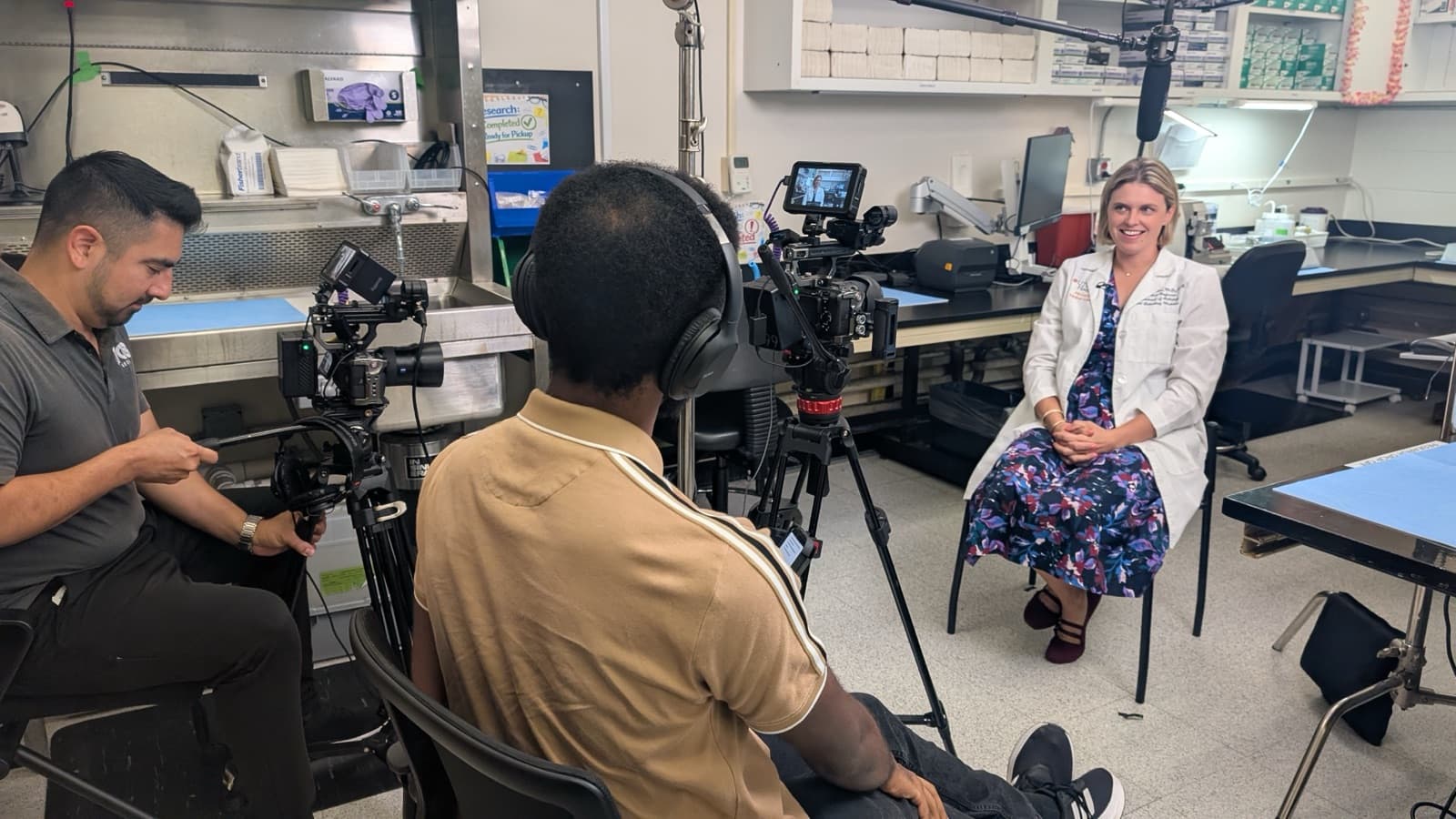
Last week we spent multiple days in Houston with the pathology residency program at UT Health Houston, building a recruiting video to help them attract residents. Nonprofit storytelling is a wider category than galas and giving days, and the same problems show up in all of it. Recruiting content is also a huge component of the work our team does.
A project like this presents a unique challenge. UT is investing in this video, with the hopes of drawing students to their program. Many are weighing several strong programs against each other. We win in the margins on a project like this. The small differentiators about this particular program.
If done properly, a recruiting video is such a powerful tool for a school like UT Health Houston. Residents are deciding where to spend four years of their career, which is not a decision anyone makes off a facilities tour and a list of statistics. Our goal for the video is to show the program's culture and help residents picture themselves in the place, working alongside those specific people. Just like in a traditional fundraising video, the ask is ultimately the same. We're asking someone to commit to an organization.
What changes when the relationship outlasts the project?
Last week we also shot photography at an Austin school for the Teacher Retirement System of Texas, part of a larger ongoing body of work helping them reach education employees across the state and get them engaged with planning for retirement.
On paper, a relatively straightforward project. But it's part of our larger relationship with TRS. It's not organized around a deliverable. It is organized around what the organization needs at the moment. That flexibility only exists because the trust and the context are already in place.
So where does your organization sit?
Those four projects are not four different situations. They are four distances along the same road:
- You have one specific thing coming up and you need a video for it. Widen the question before the shoot, not after.
- You have a video, it is a few years old, and it does not quite sound like you anymore. Plan the refresh on purpose, and separate the evergreen material from the content that won't last.
- You are thinking in terms of the year rather than the event. Map what the calendar actually needs before you shoot, so one day covers many moments.
- You have a partner who already knows your organization and you talk about needs rather than deliverables. Keep the story current so the momentum does not quietly decay.
None of these is wrong. Moving between them just costs far less when the move is intentional.
What we take from a week like this
These are the weeks we thrive off. Four organizations, three cities, one week, and a consistent pattern holds across all of them. We're working hard together on the front end to ensure value and quality on shoot day. Not in the edit, not in the gear, not in the number of cameras. In the questions asked beforehand about who needs to be reached, what they need to feel, and when. The crews and the equipment were roughly the same in Houston, San Antonio, and Austin. What each organization will still be using a year from now is not.
That is why we rebuilt 1708 Media around nonprofit and mission-driven work. We were a video production company making good videos for whoever called, and the problem was that good videos kept getting used once and then sitting still, usually at the organizations with the least capacity to plan around them. So we niched down, and we built the process around the strategy that has to happen before we shoot a thing.
If you are looking at your own calendar and recognizing one of these, that is the conversation worth having. Not what should we shoot, but what is this supposed to accomplish, and how long does it need to keep working.
If you are looking at your own calendar and recognizing one of these situations, let's talk.
The most valuable work happens before the shoot. If your organization needs help thinking through what your storytelling calendar should actually accomplish, we would love to be in that conversation with you.
Book a Story SessionWRITTEN BY 1708 MEDIA
1708 Media is an Emmy-winning video production company built for nonprofits. We produce mission films, fundraising videos, social content, and yearlong video partnerships for organizations across the country.
STRATEGY
Most First-Time Donors Never Give Twice
Fewer than 1 in 5 first-time donors give a second gift. Here's what new donors need to see in their first 90 days, and how stories bring them back.
STRATEGY
How Should Nonprofits View AI's Impact on Storytelling?
AI can streamline nonprofit storytelling, but it can't replace the human behind the story. Here's where 1708 Media draws the line.
STRATEGY
Why You Need a Partner, Not a Vendor
Almost every video company calls itself a partner. But there is a real difference between one that makes your video and one that helps you reach your goals, and for a nonprofit with a lean team, it shapes the results you get.