How Should Nonprofits View AI's Impact on Storytelling?
AI can streamline nonprofit storytelling, but it can't replace the human behind the story. Here's where 1708 Media draws the line.
As a trusted partner for nonprofits in the storytelling process, it's a question our team at 1708 Media is considering on a daily basis. Like any (every!) industry, AI is disrupting the way we do things on a daily basis. It would be naive to ignore this. Even the Wall Street Journal recently published an op-ed written entirely by AI.
If used responsibly, AI is a powerful tool that can improve efficiency and process for everything that happens before and after the story itself is told.
As seems to be the case across industries, there's nuance to this discussion. AI can bring an efficiency to the storytelling process that benefits our team internally and our nonprofit partners. We believe nonprofits should be implementing AI as part of their storytelling process, but not as a replacement for humans. AI is not a storyteller, not yet anyway.
Who knows, with the way this technology is evolving, we may get there. But as of now, we still believe AI cannot match a human's ability to truly tell stories. It's the feeling, the emotion, the understanding that can't be replicated by machine learning.
Where AI Actually Helps
AI can:
- Conduct important research during preproduction: pulling program history, past coverage, and prior interviews so our team is best prepared for preproduction planning and production day.
- Organize questions and interview prep: structuring interview guides that give our producers more room to listen and adapt in the moment, instead of scrambling to remember what's next.
- Transcribe and log interviews and flag usable soundbites: turning hours of footage into searchable text and flagged highlights, so our editors spend their time on story decisions, not combing through footage.
- Prepare captions in post production: handling the accessibility work quickly and accurately, so every story reaches the widest possible audience.
- Review old content and interviews, and identify what can still work in new storytelling endeavors: Many of our partners have old footage they haven't used, or haven't reviewed. AI can surface moments buried in years of archived footage that deserve a second life in a new campaign.
Where We Draw the Line
When it's time to actually write, to dig into the heart of the story, we set the AI aside. This is where the human differentiator can't be underestimated. You should be working with an experienced and trusted storyteller who will find a unique, human way to tell your story.
Much like painting or music, storytelling and scriptwriting is an art. It's not something that can be learned by a machine, no matter how powerful the brain behind it is. There's a nuance and a craft to telling a story the right way. To leaning into the emotions of an interview, or a moment, and figuring out the most impactful way to put that story to work in a script, and ultimately in a video.
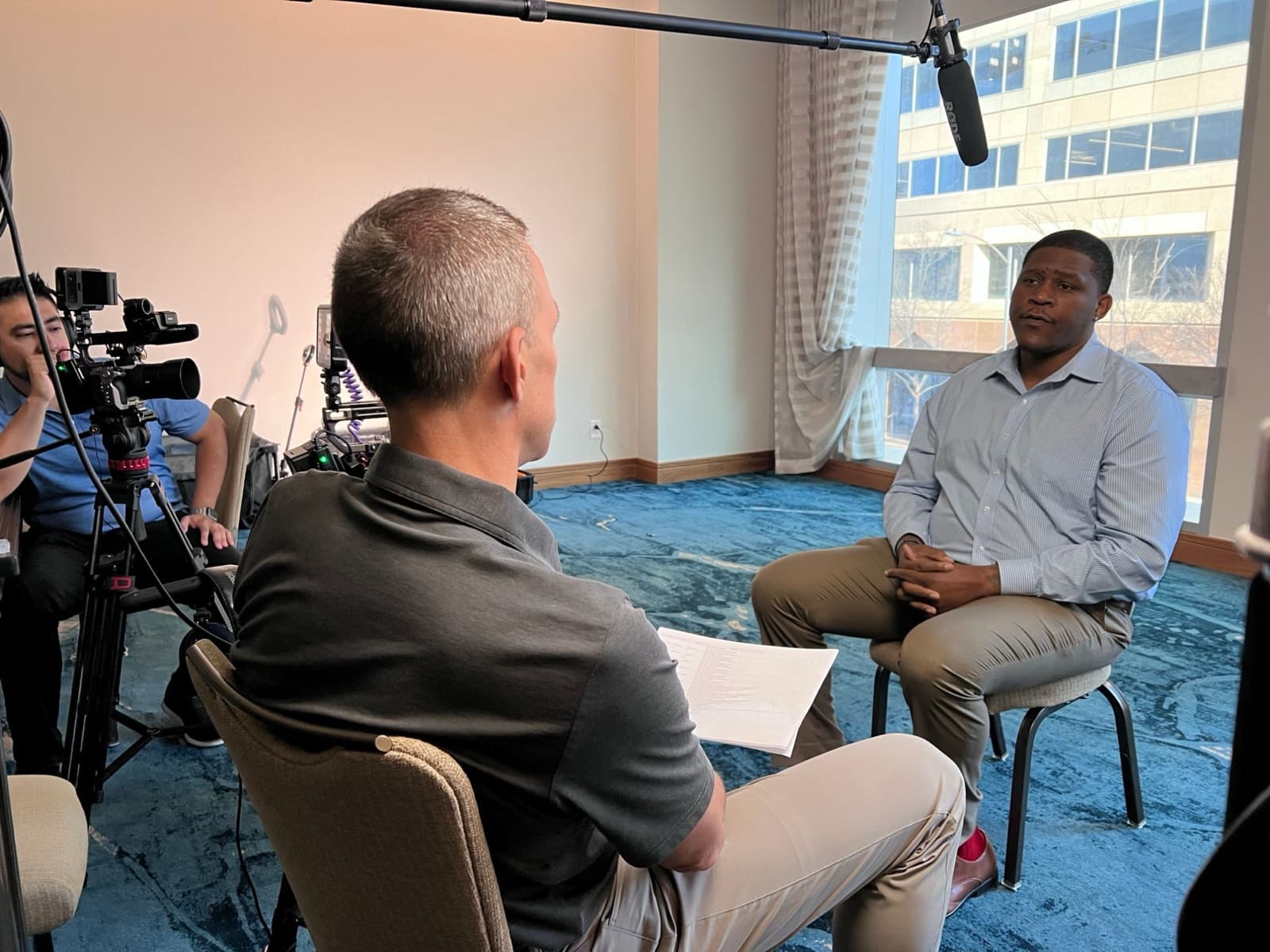
Mission-driven organizations are often dealing with incredibly sensitive stories that must be respected and handled with care. We can feed a transcript into AI and generate a script in minutes. But can that tool understand the emotion behind the words printed in the transcript? Does it recognize the look in someone's eye when they're sharing the most intimate moment of their story? Or how to linger on someone on camera for just the right amount of time to let the message sink in?
That's the difference we bring to every partnership and balance we aim to strike. AI where it saves time and benefits our partners, Emmy Award winning human storytelling when it matters most.
Thinking about how AI fits into your storytelling strategy?
That's exactly the kind of conversation we love. Let's talk about how your team can use AI to move faster without losing the human craft that makes your stories land.
Book a Story SessionWRITTEN BY 1708 MEDIA
1708 Media is an Emmy-winning video production company built for nonprofits. We produce mission films, fundraising videos, social content, and yearlong video partnerships for organizations across the country.
STRATEGY
Most First-Time Donors Never Give Twice
Fewer than 1 in 5 first-time donors give a second gift. Here's what new donors need to see in their first 90 days, and how stories bring them back.
STRATEGY
What One Production Day Should Produce: Notes From a Week of Shoots
Four shoots, three cities, one week. The most useful lesson was not about cameras. It was about what gets decided before the shoot, and how that determines a year of donor engagement.
STRATEGY
Why You Need a Partner, Not a Vendor
Almost every video company calls itself a partner. But there is a real difference between one that makes your video and one that helps you reach your goals, and for a nonprofit with a lean team, it shapes the results you get.